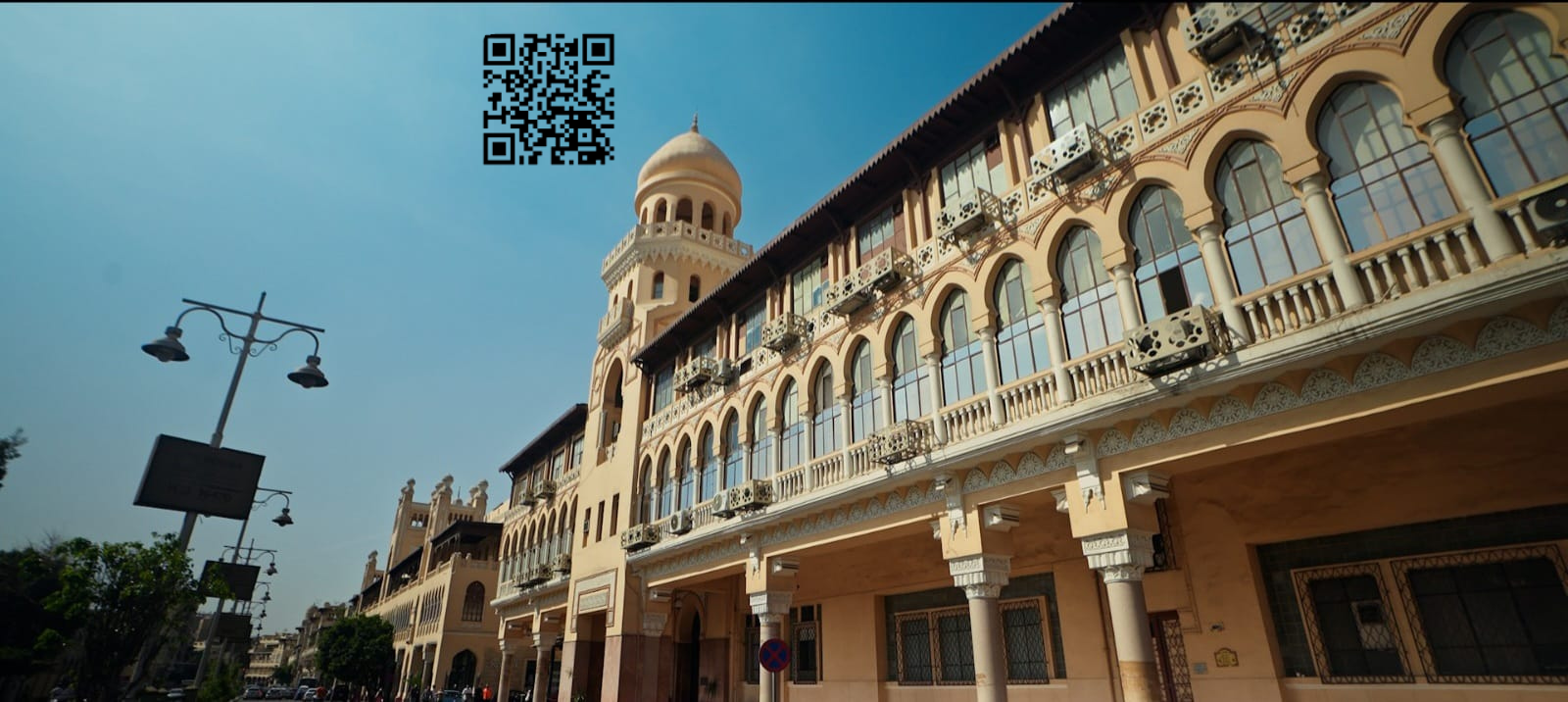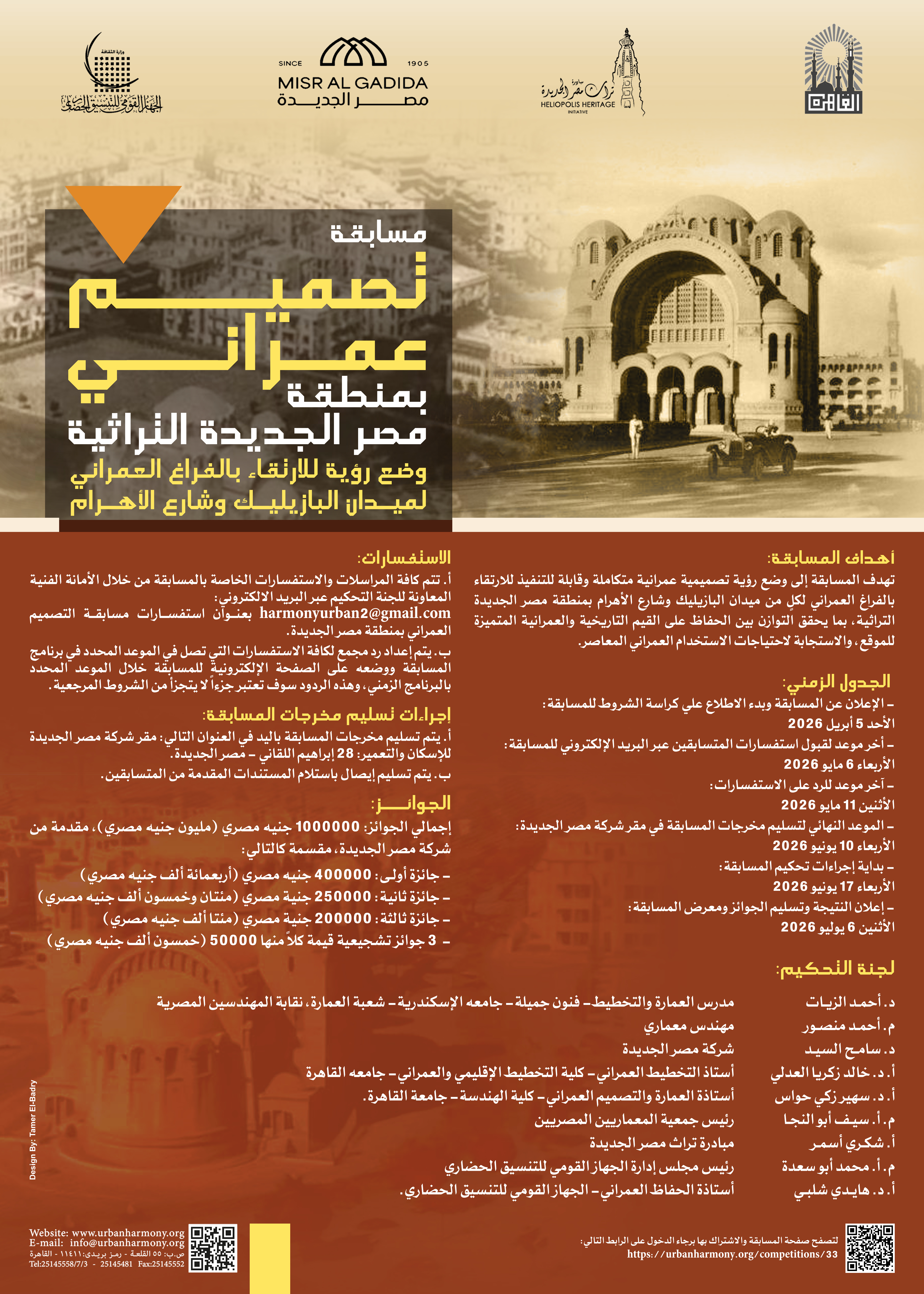
Urban design competition in the historic Heliopolis district: Developing a vision to enhance the urban landscape of Basilica Square and Al-Ahram Street.
Deadline for submissions: Wednesday, June 10, 2026
Competition Brief: Urban Regeneration Strategy
The objective of this competition is to deliver a fully executable, master urban design framework to revamp the spatial layout of Basilica Square and Al-Ahram Street in the Heliopolis heritage district. The core mandate is to strike a pragmatic balance between preserving the site’s architectural DNA and upgrading it to meet modern urban utility demands. Submissions must hit the following deliverables:
Heritage Integration & Eco-Metrics: Preserve the district's architectural identity, positioning Heliopolis as a benchmark for modern Cairo heritage. All design philosophies must heavily factor in sustainable, eco-friendly metrics.
Visual Corridor Optimization: Enhance and protect the critical sightlines anchored by Al-Ahram Street and the Basilica. Safeguard visual extensions, including the twin-minaret backdrop, and secure the cross-axial view down Baron Empain Street connecting the Baron Palace to Maryland Park.
Public Realm Upgrades: Overhaul the square and street layouts to maximize aesthetic, functional, and public space ROI, re-establishing the zone as Heliopolis's premier urban hub.
Pedestrian-First Infrastructure: Pivot traffic flows to transform the square and Al-Ahram Street into a primary promenade. Widen sidewalks, eliminate bottlenecks, and deploy clear, ADA-compliant crosswalks for seamless accessibility.
Logistics & Crowd Management (The Basilica): Fix functional bottlenecks around key service buildings. Specifically, restore the Basilica's front sidewalk to efficiently handle peak entry/exit crowd flows. Pitch smart parking solutions that don't cannibalize the area's heritage value or traffic efficiency.
Data-Driven Historical Design: Leverage the original foundational blueprints of Al-Ahram Street. Extract structural elements from the original layout to ensure modern interventions are authentic and aligned with the district's core identity.
Multimodal Mobility Balancing: Harmonize public space utilization with traffic fluidity. Reroute vehicular pathways, integrate dedicated bike lanes, and map out strategic parking and transit hubs to unify all transport modes.
Cultural Placemaking: Pinpoint the optimal location in the church's surrounding gardens for a tactical art installation honoring the founder of Heliopolis, ensuring seamless integration with the spatial layout.
Interpretive Heritage Assets: Deploy trilingual info boards (Arabic, English, French) to maximize the educational ROI of the site. One board must detail the history of Heliopolis, and the other must cover the Basilica.
Standardized Urban Furniture: Roll out a cohesive design language for street assets—pedestrian lighting, seating, wayfinding, and supplementary elements—tailored to the Heliopolis brand to upgrade the daily user experience.
Commercial Facade Code: Pitch a highly actionable regulatory framework for storefront signage on Al-Ahram Street. Strip away visual noise, remove protruding elements, and enforce treatments and color palettes (strictly earthy tones) that respect the heritage assets.
Scalable Master Blueprint: Deliver a replicable, plug-and-play framework that can be rolled out across other urban pockets within Heliopolis, driving sustainable and balanced district-wide regeneration.
Competition Link
Response to Heliopolis Competition Inquiries
Download Attachment
Competition Brief: Urban Regeneration Strategy
The objective of this competition is to deliver a fully executable, master urban design framework to revamp the spatial layout of Basilica Square and Al-Ahram Street in the Heliopolis heritage district. The core mandate is to strike a pragmatic balance between preserving the site’s architectural DNA and upgrading it to meet modern urban utility demands. Submissions must hit the following deliverables:
Heritage Integration & Eco-Metrics: Preserve the district's architectural identity, positioning Heliopolis as a benchmark for modern Cairo heritage. All design philosophies must heavily factor in sustainable, eco-friendly metrics.
Visual Corridor Optimization: Enhance and protect the critical sightlines anchored by Al-Ahram Street and the Basilica. Safeguard visual extensions, including the twin-minaret backdrop, and secure the cross-axial view down Baron Empain Street connecting the Baron Palace to Maryland Park.
Public Realm Upgrades: Overhaul the square and street layouts to maximize aesthetic, functional, and public space ROI, re-establishing the zone as Heliopolis's premier urban hub.
Pedestrian-First Infrastructure: Pivot traffic flows to transform the square and Al-Ahram Street into a primary promenade. Widen sidewalks, eliminate bottlenecks, and deploy clear, ADA-compliant crosswalks for seamless accessibility.
Logistics & Crowd Management (The Basilica): Fix functional bottlenecks around key service buildings. Specifically, restore the Basilica's front sidewalk to efficiently handle peak entry/exit crowd flows. Pitch smart parking solutions that don't cannibalize the area's heritage value or traffic efficiency.
Data-Driven Historical Design: Leverage the original foundational blueprints of Al-Ahram Street. Extract structural elements from the original layout to ensure modern interventions are authentic and aligned with the district's core identity.
Multimodal Mobility Balancing: Harmonize public space utilization with traffic fluidity. Reroute vehicular pathways, integrate dedicated bike lanes, and map out strategic parking and transit hubs to unify all transport modes.
Cultural Placemaking: Pinpoint the optimal location in the church's surrounding gardens for a tactical art installation honoring the founder of Heliopolis, ensuring seamless integration with the spatial layout.
Interpretive Heritage Assets: Deploy trilingual info boards (Arabic, English, French) to maximize the educational ROI of the site. One board must detail the history of Heliopolis, and the other must cover the Basilica.
Standardized Urban Furniture: Roll out a cohesive design language for street assets—pedestrian lighting, seating, wayfinding, and supplementary elements—tailored to the Heliopolis brand to upgrade the daily user experience.
Commercial Facade Code: Pitch a highly actionable regulatory framework for storefront signage on Al-Ahram Street. Strip away visual noise, remove protruding elements, and enforce treatments and color palettes (strictly earthy tones) that respect the heritage assets.
Scalable Master Blueprint: Deliver a replicable, plug-and-play framework that can be rolled out across other urban pockets within Heliopolis, driving sustainable and balanced district-wide regeneration.
Competition Link
Response to Heliopolis Competition Inquiries